
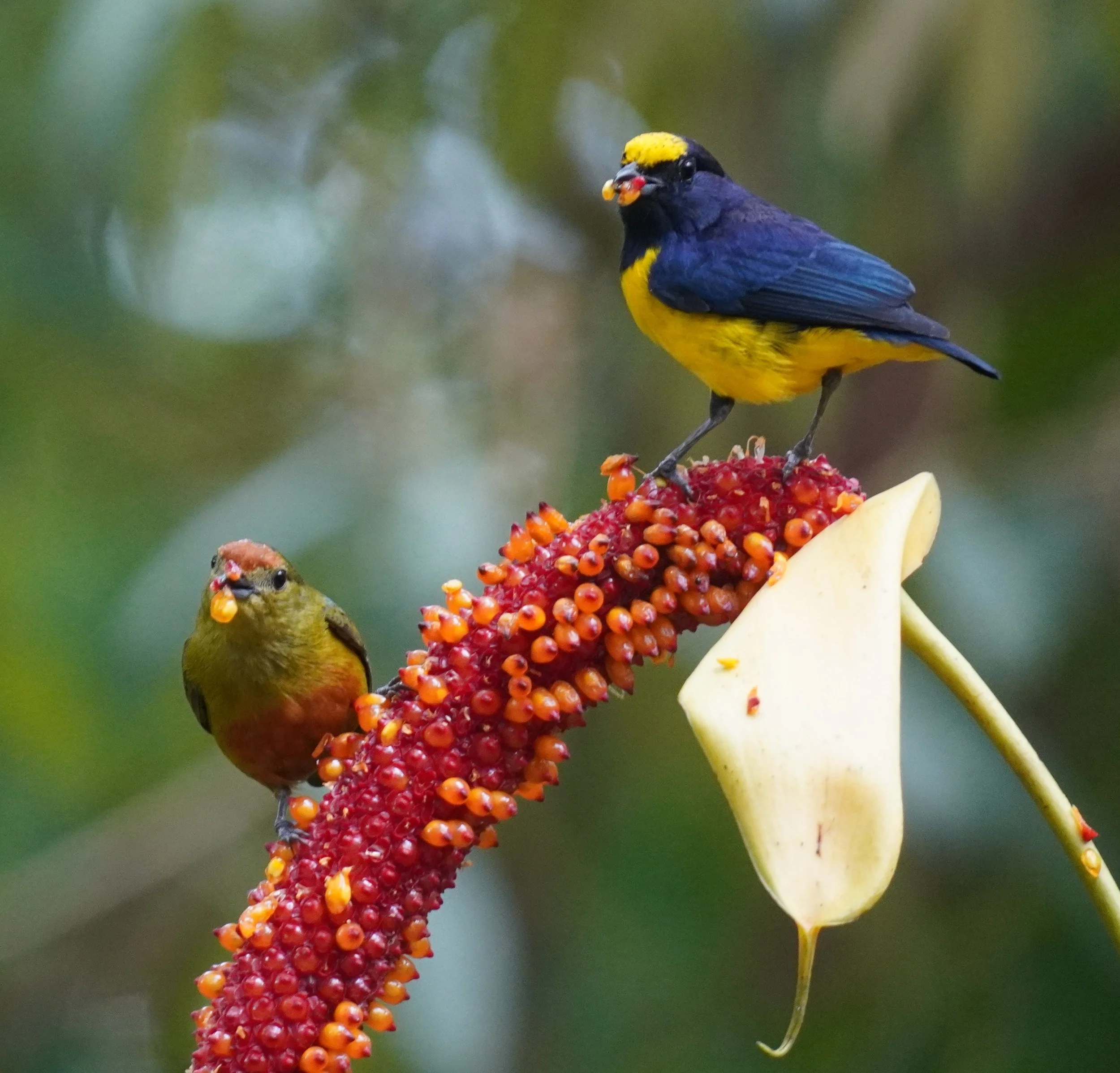
Spot-crowned Euphonia. Banner photo by Brian Rapoza
Trip Leaders: Alex Guevara – Panamanian Guide, Brian Rapoza – TAS Field Trip Coordinator
Participants: Bruce Cummings (Broward), Andrea Diamond (Miami-Dade), Linda Fleischman (Broward), Robert Gardella (Broward), David Griswold (Broward), Barbara Johnston (Broward), Ann Martinez (Miami-Dade), Deborah Magid (Miami-Dade), Yadira Pedraza (Miami-Dade), Ann Wiley (Broward)
Trip report by Brian Rapoza
Overview: Ten birders participated in this eight-day tour, beginning and ending in Panama City. The first three days of our tour were spent exploring rainforest habitat in the Panama Canal area and included visits to world-famous Pipeline Road, Metropolitan Natural Park in Panama City and the canal’s Miraflores Locks. Our next three days took us to Boquete in the mountains of western Panama, where we experienced a breathtaking sunrise above the clouds at the summit of extinct Volcan Baru. At an elevation of 11,401 feet, it’s Panama’s highest peak. We also hiked two different trails through cloud forest habitat and visited a working coffee plantation on the slopes of the volcano as well as a private reserve in the foothills southwest of Boquete. Our last day was spent back in Panama City, where we explored colonial areas of the city and scanned for waterbirds on coastal mudflats.
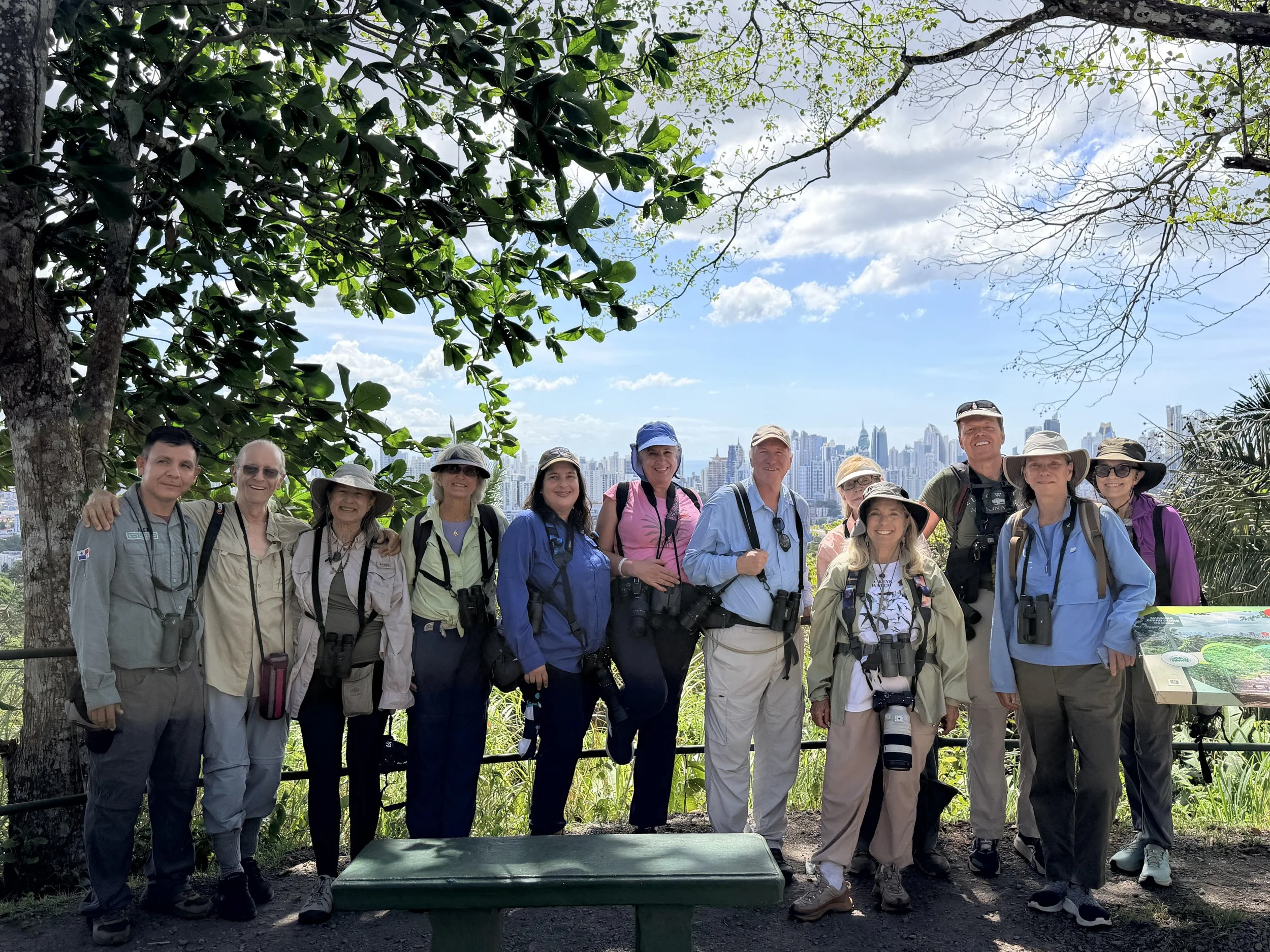
The group at Mirador Cerro Cedro, Metropolitan Park, Panama City
Daily Summaries (names in bold indicate our first encounter with that species)
Day 1: Saturday, March 21
After arriving at Tocumen International Airport in Panama City, we were met by Alex Guevara, our local guide for this tour, and were transported by bus to Gamboa Rainforest Resort, our base for the next three nights. This beautiful resort, located where the Chagres River meets the Panama Canal, is surrounded by lush rainforest teeming with tropical birds and other wildlife.
After checking in to our rooms, some in the group used the time we had before dinner to explore the grounds around the resort. Our brief efforts resulted in a cumulative checklist of 30 species: Pale-vented Pigeon, White-tipped Dove, Short-tailed Swift, Black-throated Mango, Black and Turkey Vultures, Keel-billed Toucan, Red-crowned Woodpecker, Crested and Yellow-headed Caracaras, Red-lored Amazon, Great Kiskadee, Boat-billed, Social, Streaked and Piratic Flycatchers, Tropical Kingbird, Southern Rough-winged Swallow, Southern House Wren, Tropical Mockingbird, Clay-colored Thrush, Thick-billed Euphonia, Northern Yellow Warbler, Flame-rumped, Crimson-backed, Blue-gray, Palm and Plain-colored Tanagers, Red-legged and Green Honeycreeper and Buff-throated Saltator. We also spotted our first mammals of the tour: Central American Agouti and Red-tailed Squirrel.
Day 2: Sunday, March 22
Our first full day began at the Panama Rainforest Discovery Center, located at the edge of Soberania National Park on Pipeline Road, just a short drive from the resort. We arrived before sunrise and spent several hours at the top of the center’s 130-foot observation tower, which provides a spectacular panoramic view of the rainforest canopy. Those in the group who were first to begin the climb up the 174 steps of the tower’s spiral staircase were rewarded with fleeting glimpses of a Great Tinamou. By the time everyone had reached the top, it was already light enough to see birds beginning to appear in the treetops.
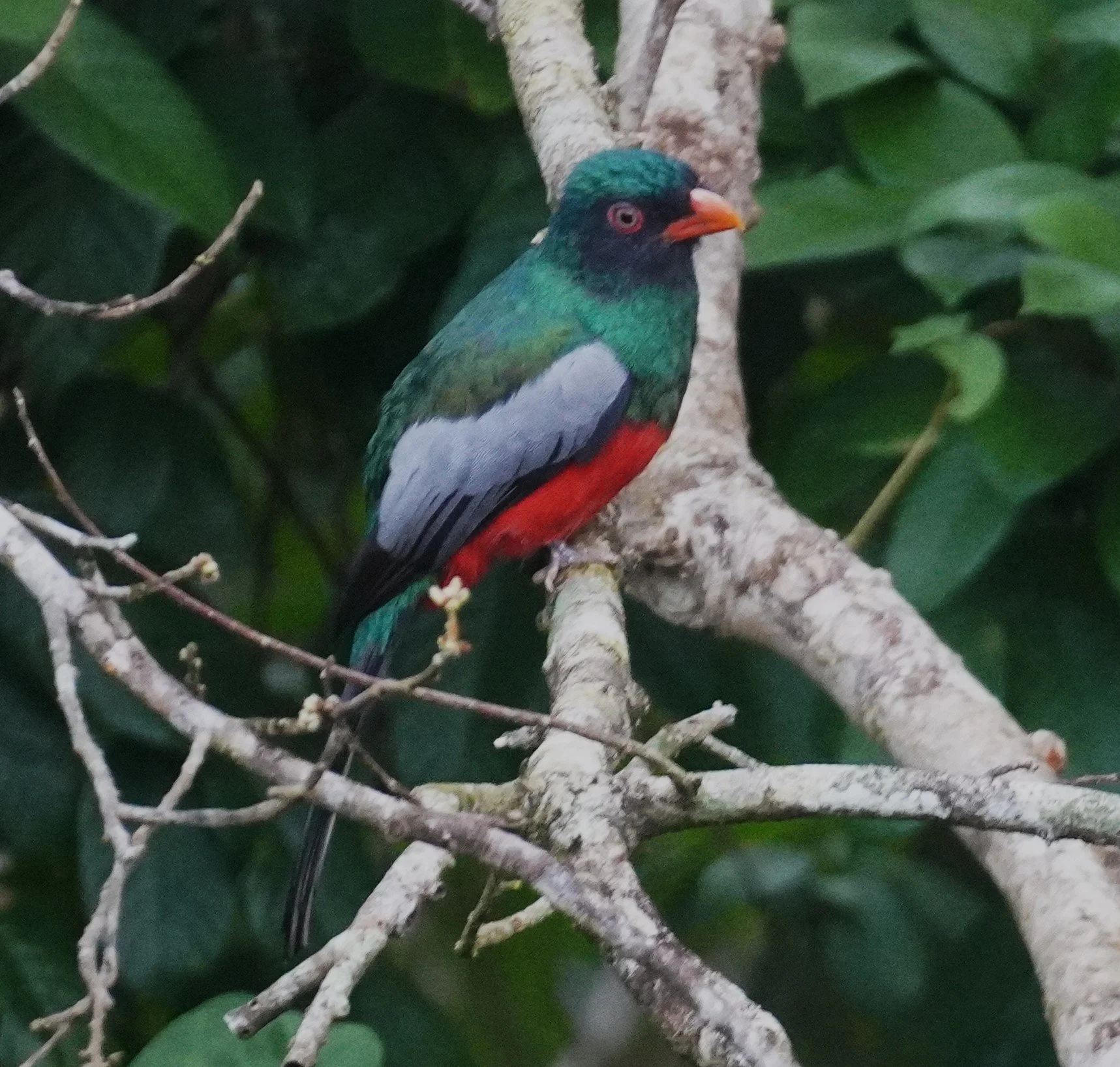
Slaty-tailed Trogon
Nearly fifty different species were tallied while on the tower, including Scaled and Short-billed Pigeons, Great Blue Heron, Hook-billed, Gray-headed and Snail Kites, Slaty-tailed Trogon, Pied Puffbird, Yellow-throated Toucan, Black-cheeked and Cinnamon Woodpeckers, Blue-headed Parrot, Mealy Amazon, Blue Cotinga, Black-crowned Tityra, Yellow-olive Flatbill, Brown-capped and Mistletoe Tyrannulets, Southern Beardless-Tyrannulet, Forest Elaenia, Eastern Wood-Pewee, Bright-rumped Atilla (heard only), Dusky-capped Flycatcher, Green Shrike-Vireo (heard only), Bank and Barn Swallows, White-browed Gnatcatcher, Black-bellied Wren, Yellow-crowned Euphonia, Yellow-tailed Oriole, Bay-breasted Warbler, White-shouldered and Golden-hooded Tanagers, Blue Dacnis and Slate-colored Seedeater.
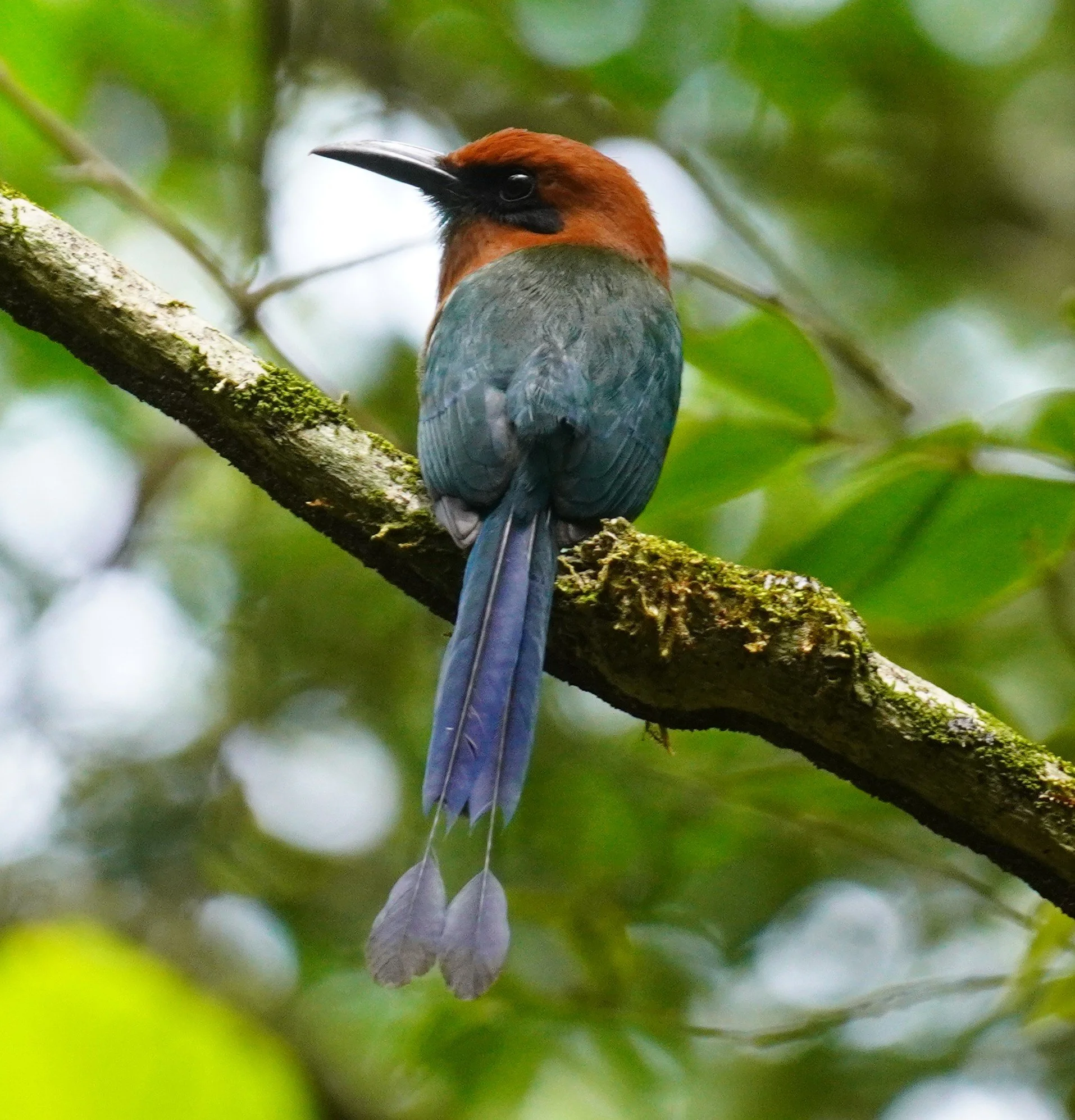
Broad-billed Motmot
After descending the tower (a few Lesser Sac-winged Bats were seen on the staircase on the way down), we spent some time at the visitor center’s hummingbird feeders, where we saw several White-necked Jacobin as well as Blue-chested and Violet-bellied Hummingbirds. While there, a Double-toothed Kite was spotted at the top of a tree above the feeders. We spent the rest of the morning hiking a short section of Pipeline Road, where we added the following birds to our rapidly growing trip list: Pheasant Cuckoo (heard only), Black Hawk-Eagle, Black-tailed, Gartered Violaceous and Graceful Black-throated Trogons, Whooping and Broad-billed Motmots, Black-breasted and White-whiskered Puffbirds, Black-crowned Antshrike, Checker-throated Stipplethroat, Dot-winged Antwren, Northern Plain-Xenops, Red-capped Manakin, Southern Bentbill, Western Olivaceous Flatbill, Bay Wren and Scarlet-rumped and Yellow-rumped Caciques. We also added Mantled Howler Monkey, Variegated Squirrel and White-nosed Coati to our mammal list.
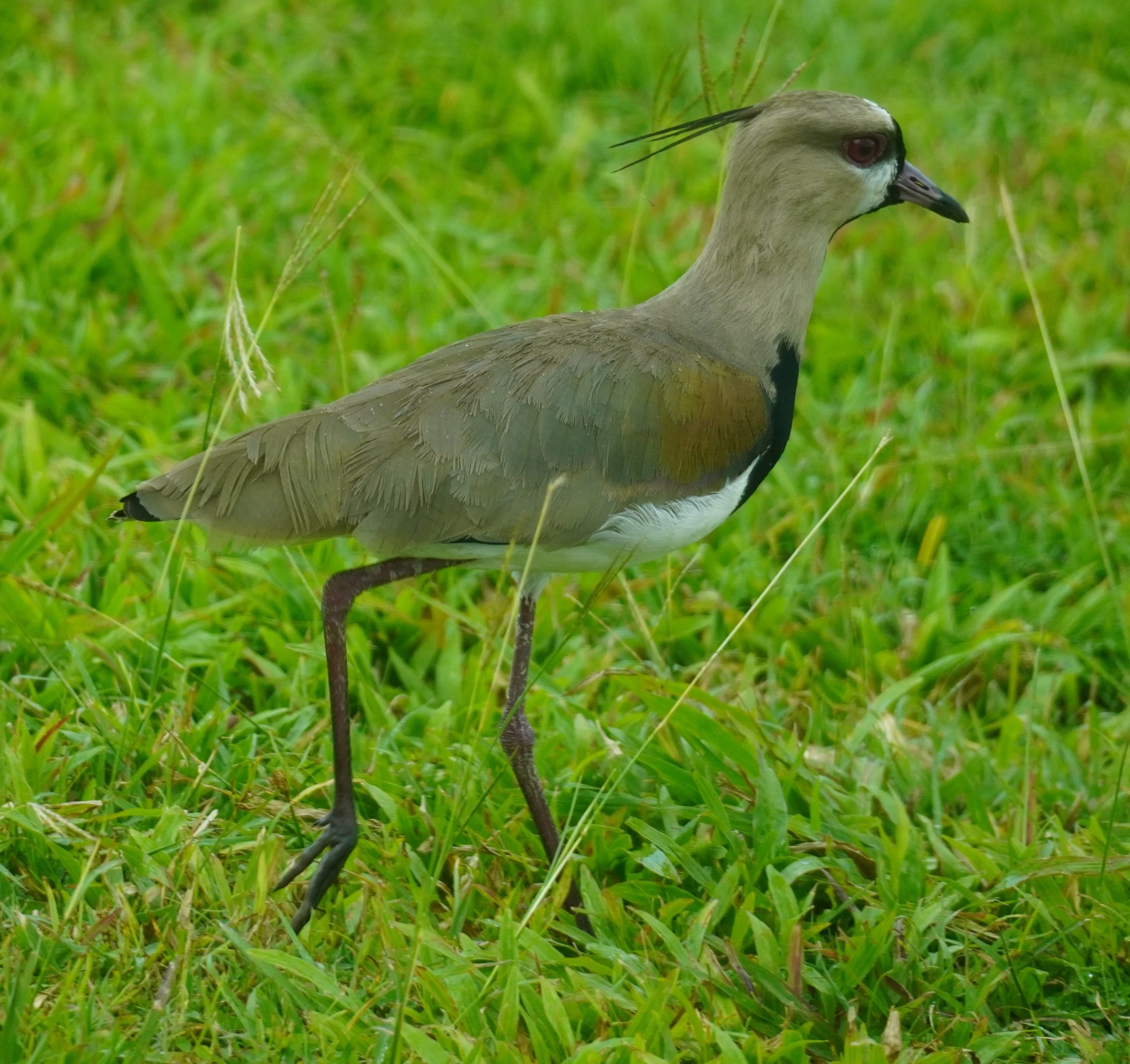
Southern Lapwing
We returned to the resort for lunch and a short break before heading out again for an afternoon birding excursion. Some in the group used some of their down time to search for birds around their rooms, adding Rufous-tailed Hummingbird, Cinnamon Becard and Golden-fronted Greenlet to the trip list. Our first stop this afternoon was a wetland area near Pipeline Road known as the Ammo Dump Ponds. Of the thirty-six species seen around the ponds, a little over half were new for the trip: Purple Gallinule, Southern Lapwing, Wattled Jacana, Magnificent Frigatebird, Anhinga, Rufescent Tiger-Heron, Striated Heron, Orange-chinned Parakeet, Common Tody-Flycatcher, Panama Flycatcher, Lesser Kiskadee, Rusty-margined Flycatcher, Yellow-green Vireo, Mangrove Swallow, Gray-breasted Martin, Buff-breasted Wren, Shiny Cowbird, Northern Waterthrush and Variable Seedeater.
We once again returned to the resort, making a quick stop at the marina, where we found a couple of Greater Ani and a Smooth-billed Ani. The rest of the afternoon was spent exploring a section of the resort known as Sendero La Chunga. Among the forty-four bird species tallied there were Gray-headed Chachalaca, Ruddy Ground-Dove, Gray-chested Dove, Purple-crowned Fairy, Fasciated and Barred Antshrikes, Jet Antbird, Black-faced Antthrush (heard only), Cocoa Woodcreeper, Masked Tityra, Eastern Kingbird, Summer and Gray-headed Tanagers. Green Shrike-Vireo was once again heard only. We added one new mammal there: an adorable Panamanian Night Monkey. After dinner, the group went on a night drive in one of the resort’s safari vehicles. A Spectacled Caiman was the only sighting of note.
Day 3: Monday, March 23
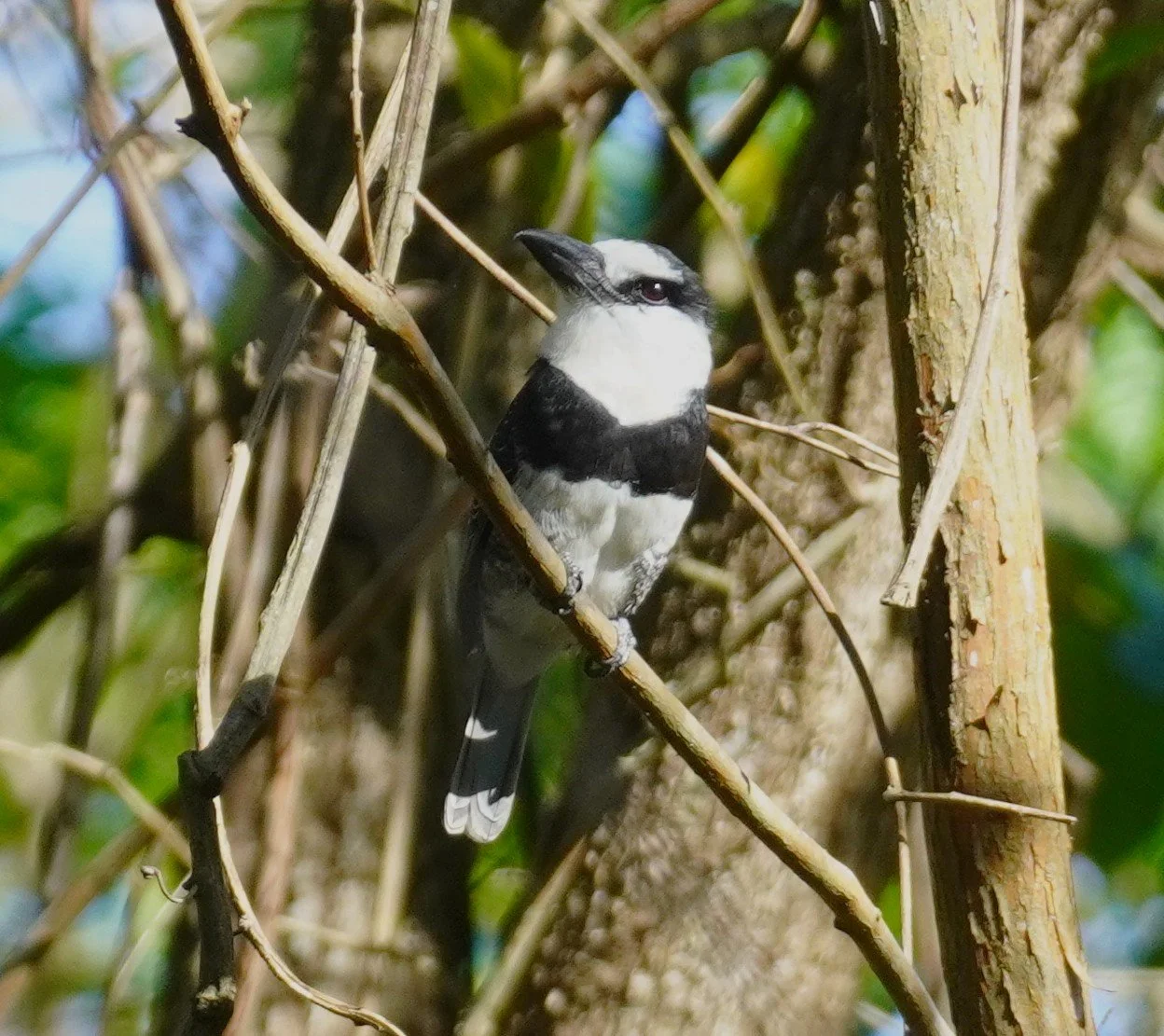
White-necked Puffbird
Our second and final full day in the Panama Canal area began with a visit to Metropolitan Natural Park in Panama City. This 573-acre park protects the only tropical forest located within a capital city in Latin America. We spent most of the morning exploring the park, hiking up to Mirador Cerro Cedro, an overlook that provides spectacular views of the gleaming skyscrapers of downtown Panama City and the Pacific Ocean beyond. Along the way to the overlook, we spotted over fifty bird species, including eighteen that were new for the trip: Common Squirrel Cuckoo, White-vented Plumeleteer, Plumbeous and Swainson’s Hawks, White-necked Puffbird, Crimson-crested Woodpecker, Streak-crested Woodcreeper, Lance-tailed Manakin, Yellow-olive and Yellow-winged Flatbills, Forest Elaenia, Sulfur-bellied Flycatcher, Lesser Greenlet, Black-chested Jay (heard only), Rufous-and-white Wren, Yellow-backed Oriole and Scarlet and White-shouldered Tanagers. After only hearing Green Shrike-Vireos yesterday, we finally saw one today. Three new mammals were also seen: Hoffmann’s Two-toed Sloth, Brown-throated Three-toed Sloth and Geoffroy’s Tamarin Monkey.
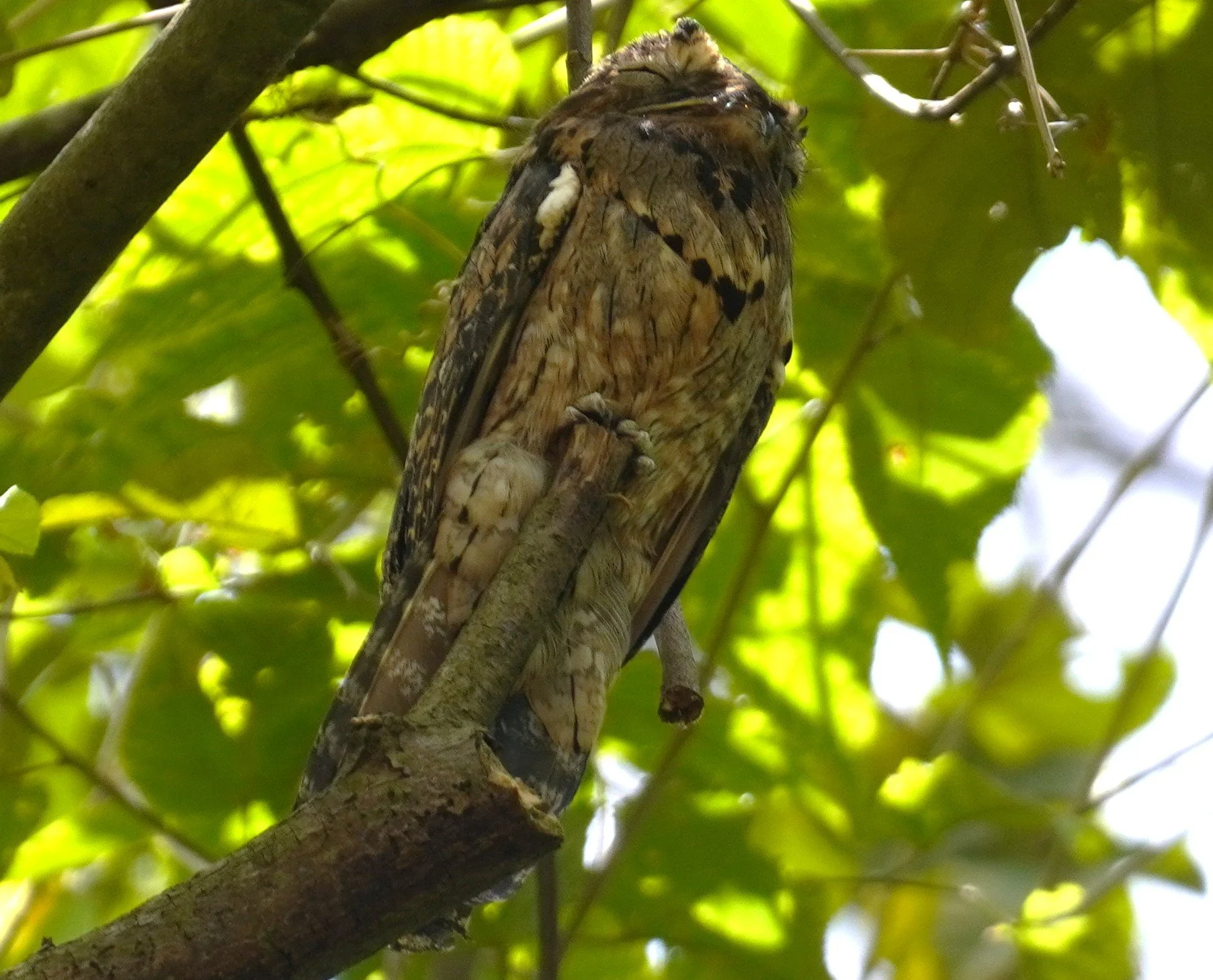
Common Potoo
Using information provided by a local guide we met while at the park, we were able to locate a Common Potoo on its day roost in a neighborhood just outside the park. We then visited the grounds of Biomuseo, a vibrantly colored museum celebrating the biological and cultural diversity of the country, located on the Panama City waterfront at the entrance to the Panama Canal. We saw thirty-four different bird species during this stop, including Garden Emerald, Scaly-breasted and Sapphire-throated Hummingbirds, Laughing Gull, Brown Pelican, Straight-billed Woodcreeper, Yellow-bellied Elaenia, Black-and-white Warbler and Mangrove Yellow Warbler.
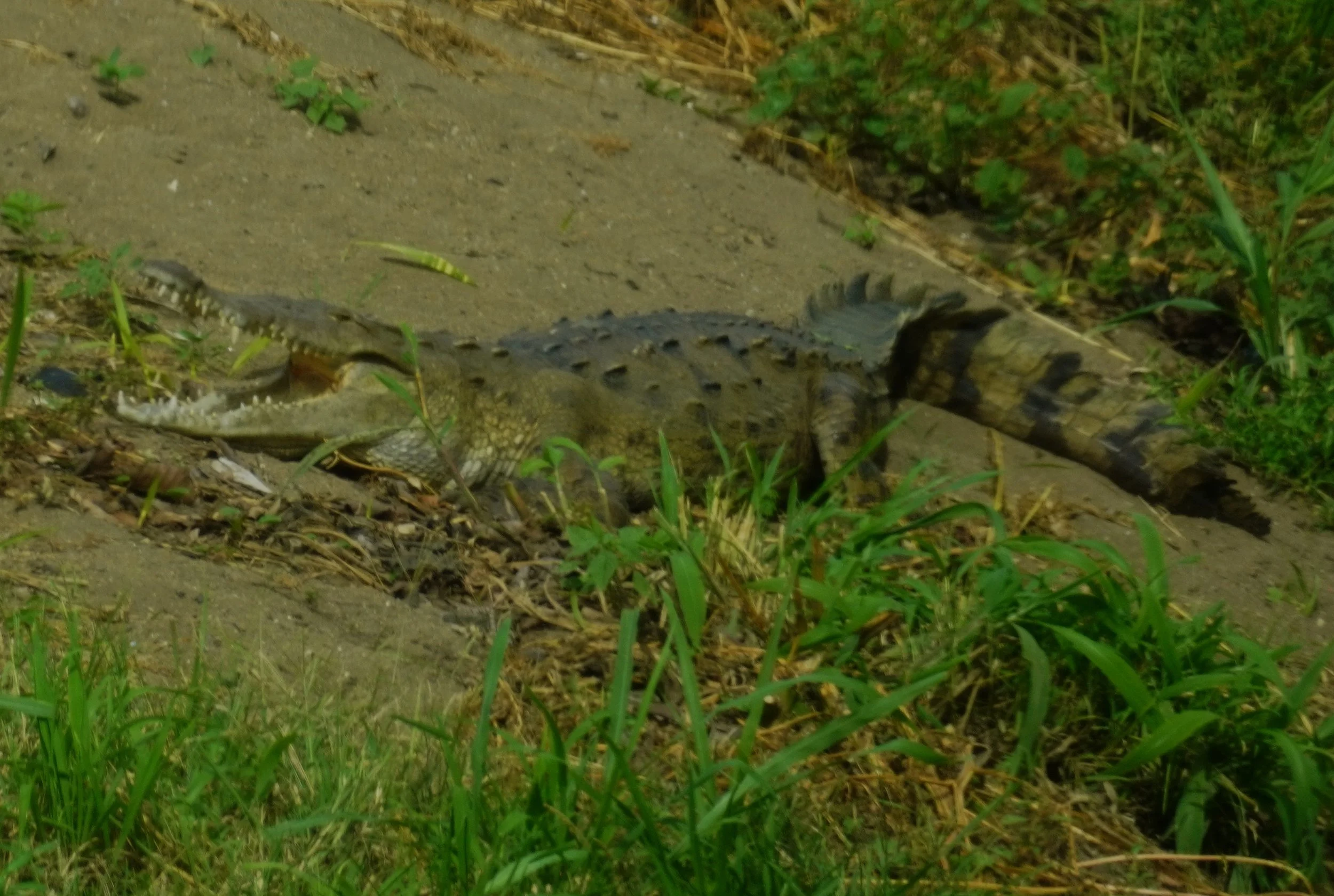
American crocodile
After eating lunch at a local restaurant, we visited the headquarters of Audubon Panama, whose director gave us a presentation highlighting that organization’s efforts to protect migrant shorebirds and the stopover habitat they use when passing through the country. The rest of the afternoon was spent at the canal’s Miraflores Locks visitor center, where we viewed an IMAX movie (narrated by Morgan Freeman) highlighting the history of the canal, then witnessed the locks in action as a large cargo ship passed through the locks. On the drive to the locks, we added a few more birds to our list, including Black-bellied Whistling-Duck, Western Cattle-Egret and Ringed Kingfisher. We also saw a couple of American Crocodiles along the road. After dinner at the resort, some of the group went with Alex in search of owls and other nocturnal wildlife but only found a few frogs.
Day 4: Tuesday, March 24
An early-morning, one hour flight from Panama City to the city of David, in western Panama, was the first item on today’s agenda. A Capybara was spotted in the road as we began our drive from Gamboa to Panama City. Three new birds, Neotropic Cormorant, Great Egret and Fork-tailed Flycatcher, were added to our trip list while waiting to board our flight at Tocuman Airport.
A bus and driver were waiting for us when we arrived in David, but as we exited the airport, someone in the group spotted a small bird of prey, which turned out to be a Pearl Kite, the only one we would see on the tour. While enjoying views of the kite, several other birds were seen, including our first Bat Kite and Yellow-faced Grassquit. We continued up into the Chiriquí highlands, making no additional stops for roadside birds and arriving in the picturesque little mountain town of Boquete after a drive of about an hour. After checking into the historic Hotel Panamonte, our home for the next three nights, but before lunch at a nearby restaurant, some in the group went birding on the hotel grounds. Among the birds seen there were two new ones: Rufous-collared Sparrow and Tennessee Warbler.
After lunch, we drove higher up into the mountains to Pipeline Trail (not to be confused with Pipeline Road from earlier in the tour). This is one of many trails in the area that provide access to cloud forest habitat on the slopes of Volcan Baru, an extinct volcano that dominates the skyline west of Boquete. During a quick stop at a narrow bridge just before reaching the trailhead, we found a Lesser Violetear and a Brown-capped Vireo. A kettle of Broad-winged Hawks and one Red-tailed Hawk were spotted circling overhead.
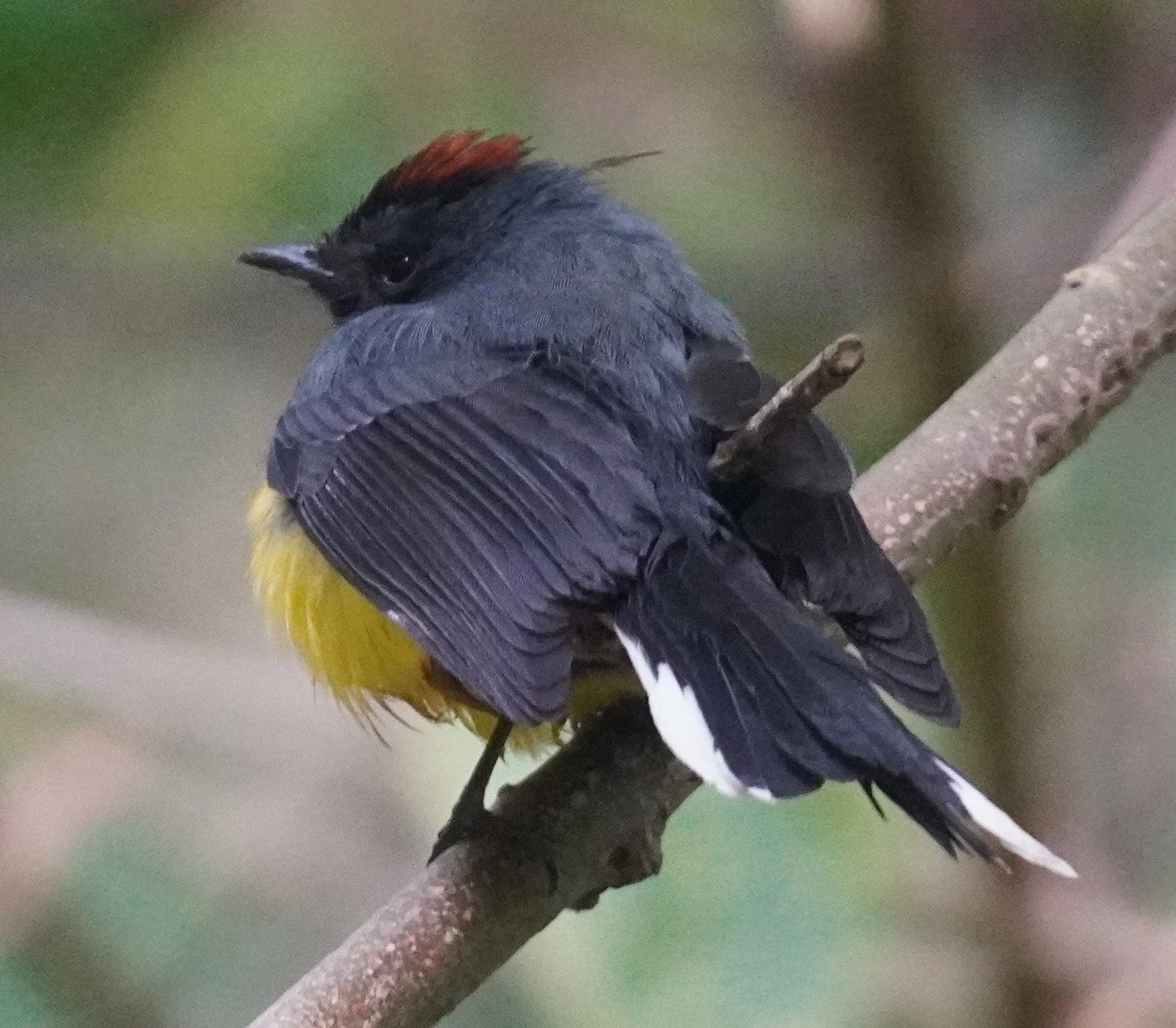
Slate-throated Redstart
Forty birds were tallied during the four hours spent hiking Pipeline Trail, including the first Resplendent Quetzal of the tour (though that bird was not seen by everyone). Among the oddest of our sightings was a Slate-throated Redstart that somehow impaled itself on a twig! Alex was able to capture the bird and remove the twig, after which the bird flew away, hopefully to live another day. Twenty-seven other birds were added to our trip list: Spotted Wood-Quail, Band-tailed Pigeon, Green Hermit, Purple-throated Mountain-gem, Swallow-tailed Kite, Northern Emerald Toucanet, Golden-olive Woodpecker, Scaly-throated Foliage-gleaner, Red-faced Spinetail, Eye-ringed Flatbill, Lesser Elaenia, Dark Pewee, Black Phoebe, Gray-breasted Wood-Wren, Black-faced Solitaire, Orange-billed Nightingale-Thrush, White-throated Thrush, Elegant Euphonia, Lesser Goldfinch, Common Chlorospingus, Black-striped Sparrow, Wilson’s Warbler, Flame-colored, Scarlet-rumped and Silver-throated Tanagers, Scarlet-thighed Dacnis and Blue-black Grassquit.
Day 5: Wednesday, March 25
Today was devoted to an exploration of foothill habitat at Birding Paradise, a private reserve located about an hour’s drive south and west of Boquete. Birds seen along the way to the reserve included Roadside Hawk and Chestnut-sided Warbler. When we arrived at Birding Paradise, we were greeted by Mishael Rivera, the owner of the reserve and an expert bird guide. During the time we were there, Mishael and Alex worked tirelessly to find and identify as many birds as possible for us along the reserve’s trails or coming to the feeders at their guesthouse.
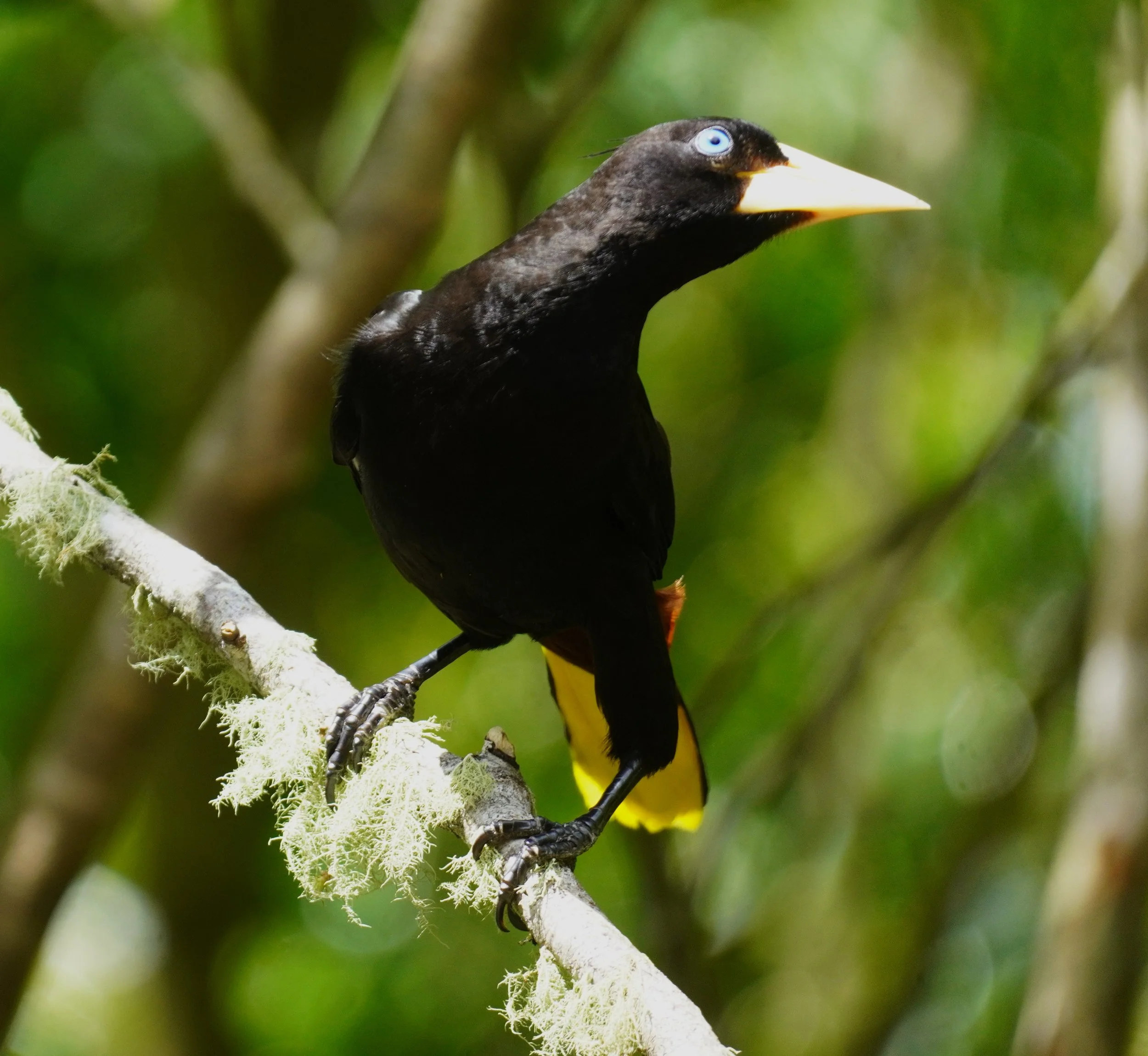
Crested Oropendola
By the end of our visit (which included lunch), we had produced a checklist of nearly 100 different species! As would be expected with such a big list, many of those birds were new: White-collared and Lesser Swallow-tailed Swifts, White-tipped Sicklebill, Snowy-bellied Hummingbird, Gray-cowled Wood-Rail, Short-tailed Hawk, Olivaceous Piculet, Lineated Woodpecker, Laughing Falcon, Brown-throated and Crimson-fronted Parakeets, Chiriqui Foliage-gleaner, Pale-breasted Spinetail, White-ruffed and Orange-collared Manakins, Yellow Tyrannulet, Ochre-bellied, Bran-colored, Yellow-bellied and Gray-capped Flycatchers, Philadelphia and Red-eyed Vireos, Blue-and-white Swallow, Spot-crowned Euphonia, Black-striped and Orange-billed Sparrows, Crested and Chestnut-headed Oropendolas, Baltimore Oriole, Bronzed and Giant Cowbirds, Chestnut-capped and Buff-rumped Warblers, Red-crowned Ant-Tanager, Rose-breasted Grosbeak, Painted Bunting, Speckled Tanager, Thick-billed Seed-Finch, Bananaquit and Streaked Saltator.
Upon our return to Boquete, a few members of the group paid a late-afternoon visit to Finca Lérida, an estate and working coffee plantation on the slopes of Volcan Baru. In addition to visiting the finca’s cafe, we searched for birds on the property, finding nineteen species, including three new ones: Scintillant Hummingbird, Three-wattled Bellbird (heard only) and Slaty Flowerpiercer.
Day 6: Thursday, March 26
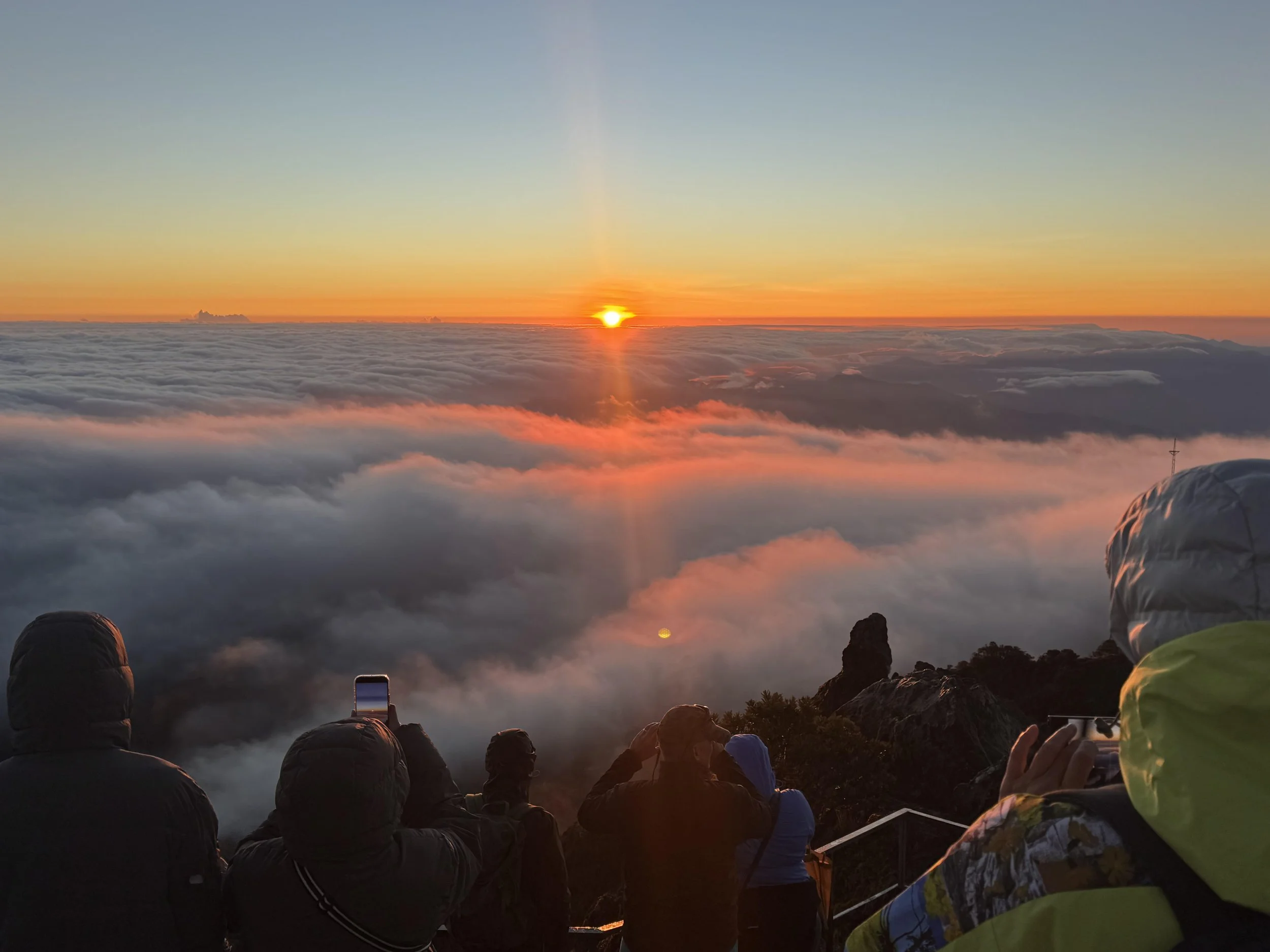
Volcan Baru sunrise
We assembled very early this morning, as the day finally arrived for us to drive to the summit of Volcan Baru so we could experience the sunrise from the highest peak in Panama. The road to the top is unpaved and can only be driven using high-clearance, four-wheel drive vehicles, which Alex arranged with a local tour operator beforehand. We split into two groups, boarded two high-clearance vehicles and began our ascent under cover of darkness. It was still dark when we arrived near the summit, but we quickly realized that we wouldn’t be alone to see the sunrise, as other groups were already present and several other groups would soon join us. Reaching the actual summit, which is marked by a large white cross, required us to clamber up a trail that thankfully included stairs with railings. By first light, we could see a blanket of clouds completely covering the mountain below us. When the sun finally rose, it provided a truly breathtaking experience for all who were assembled there.
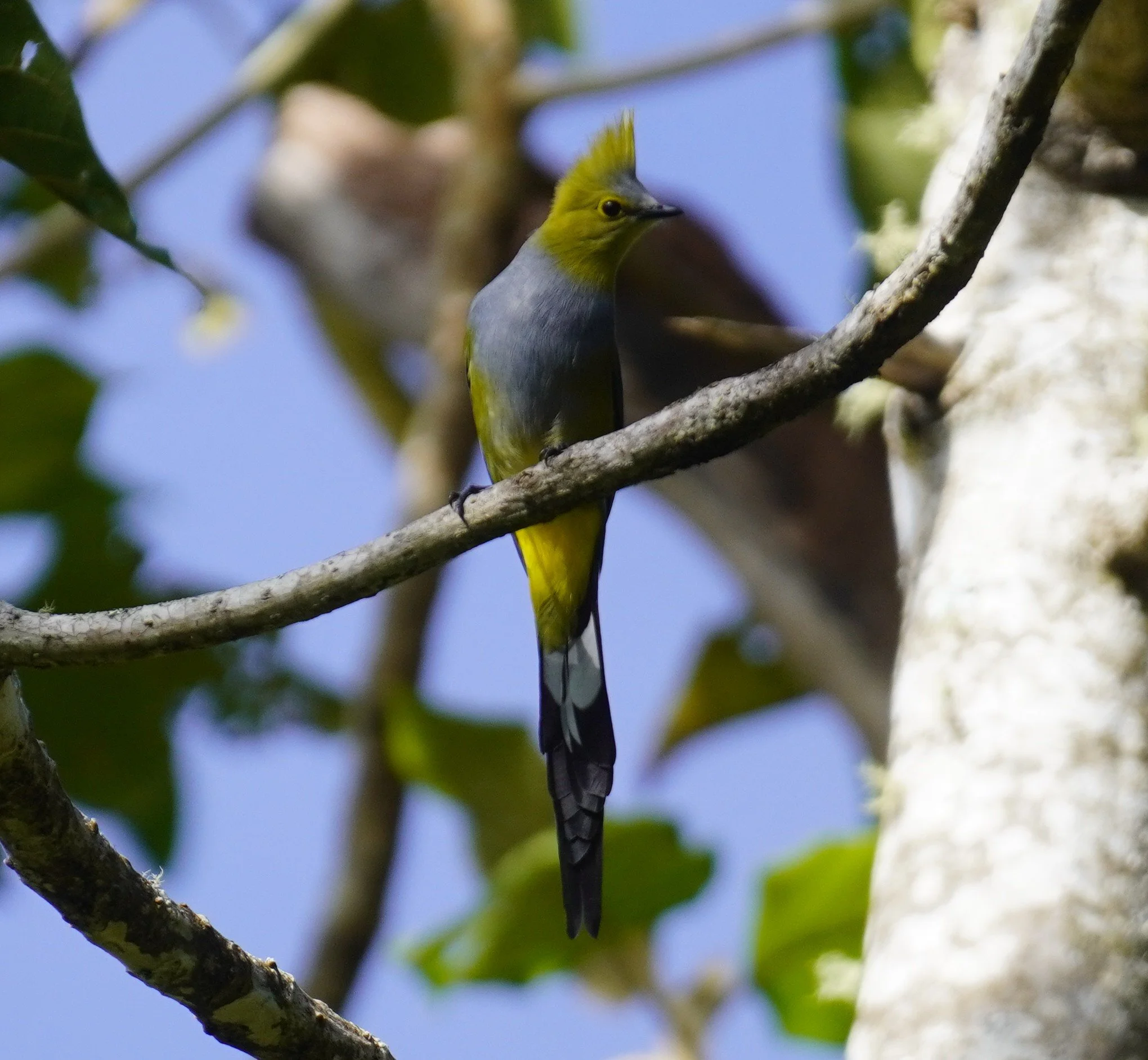
Long-tailed Silky-flycatcher
The only bird seen while watching the sunrise was Sooty Thrush. Once we descended back to where all the vehicles were parked, where we enjoyed a wonderful breakfast prepared for us, we found three additional species: Volcano Hummingbird, Sooty-capped Chlorospingus and Volcano Junco. After breakfast, we reboarded our vehicles and began our descent down to Boquete. In the light of day, we could actually see the condition of the road we had ascended in darkness. Work crews using heavy equipment were busy repairing the road and our vehicles had to scramble to avoid both the work crews and large rocks that littered the road. We stopped to look for birds at a spot where it was safe to pull over and found several new birds in this area: Black Guan, Fiery-throated Hummingbird, Mountain Elaenia, Black-capped Flycatcher, Timberline Wren, Mountain Thrush, Long-tailed Silky-flycatcher and Flame-throated Warbler. Another stop for roadside birding led to our discovery of a small group of Resplendent Quetzals, including a male and female that flew directly over us! Three new species were also found during that stop: Vaux’s Swift, Acorn Woodpecker and Slaty-backed Nightingale-Thrush.
After arriving back in Boquete, some in the group took the opportunity to wander around town for shopping and sightseeing, adding our only White-winged Dove for the tour. After lunch at the same restaurant we visited a couple of days before, we spent the rest of the afternoon exploring an area known as Sendero Los Quetzales, where we found another pair of Resplendent Quetzals, along with several new birds: Prong-bellied Barbet, Hairy Woodpecker, Sulphur-winged Parakeet, Silvery-fronted Tapaculo, Spot-crowned Woodcreeper, Lineated Foliage-gleaner, Yellowish Flycatcher, Yellow-thighed Brushfinch and Golden-winged Warbler. We also saw our first (and only) venomous snake of the trip, a Side-striped Palm Viper.
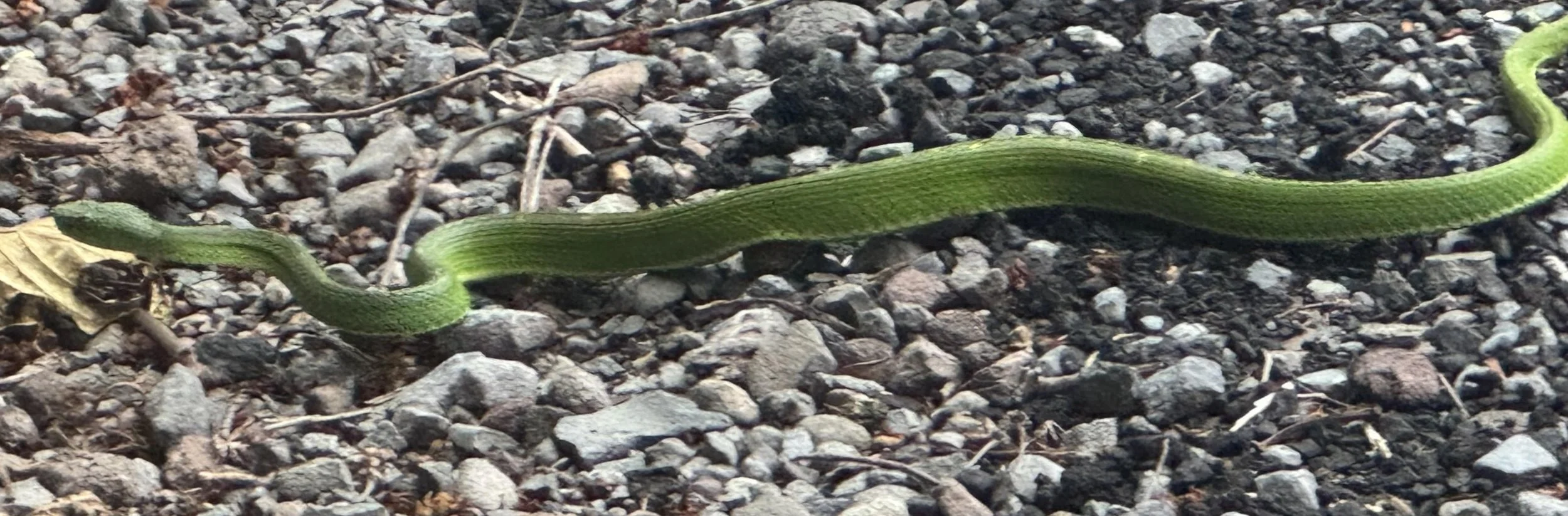
Side-striped Palm Viper
Day 7: Friday, March 27
We bid goodbye to Boquete this morning and drove back to David for our return flight to Panama City. Some in the group couldn’t resist the temptation to look for birds near the airport and managed to find twenty-two species, though none were found that we hadn’t seen before. Once we arrived back in Panama City, we spent the rest of the morning scoping the mudflats near the Panama Viejo museum, along with several other birders, including the Audubon Panama director we met earlier in the tour. Among the thirty-one species we found there were thirteen trip birds: Blue-winged Teal, Black-necked Stilt, Black-bellied and Wilson’s Plovers, Hudsonian Whimbrel, Short-billed Dowitcher, Spotted and Western Sandpipers, Gull-billed, Sandwich and Royal Terns, and Little Blue and Tricolored Herons. We also saw our last new mammal of the tour: a Crab-eating Raccoon.
After lunch at a waterfront restaurant, we checked into the Radisson Hotel Panama Canal, our lodging for the last night of the tour. Later in the afternoon, we toured the colonial section of the city known as Casco Viejo (Alex was our tour guide). When we reached the waterfront, we found birds on the mudflats, including Willet, Ruddy Turnstone, Caspian Tern, Yellow-crowned Night-Heron and Cocoi Heron. An Osprey and a Peregrine Falcon were spotted overhead. We ended the evening with a farewell dinner and a performance of folkloric dance at Las Tinajas, a traditional Panamanian restaurant.
Day 8: Saturday, March 28
A few in the group had an afternoon flight home today, providing us with an opportunity to search for birds around the hotel and along the waterfront. We found forty-eight different birds during our final morning in Panama, including our last two new birds: Orchard Oriole and Saffron Finch. We ended the tour with 297 bird species, all of which are listed in this eBird trip report. Participant photos of over a hundred of the birds we encountered can also be viewed in the eBird trip report.
Special thanks to Alex Guevara, our amazing guide, our bus drivers, local guides, hotel and restaurant staffs and everyone else we met on this tour. I would also like to thank everyone at Holbrook Travel, in particular Specialty Group Travel Consultant Jill Hays, for making this incredible tour possible.