
On Saturday, March 7, over forty birders joined TAS Field Trip Coordinator Brian Rapoza for a warm but windy day of birding in Everglades National Park. Participants assembled at Coe Visitor Center, where our first 25 bird species were tallied: Eurasian Collared Dove, White-winged Dove, Ruby-throated Hummingbird, Anhinga, Turkey Vulture, Osprey, Red-shouldered Hawk, Red-bellied Woodpecker, Downy Woodpecker, Eastern Phoebe, Great Crested Flycatcher, White-eyed Vireo, Blue Jay, American Crow, Tree Swallow, Blue-gray Gnatcatcher, Gray Catbird, Red-winged Blackbird, Common Grackle, Black-and-white Warbler, Common Yellowthroat, Palm Warbler, Yellow-rumped Warbler, Prairie Warbler and Northern Cardinal.
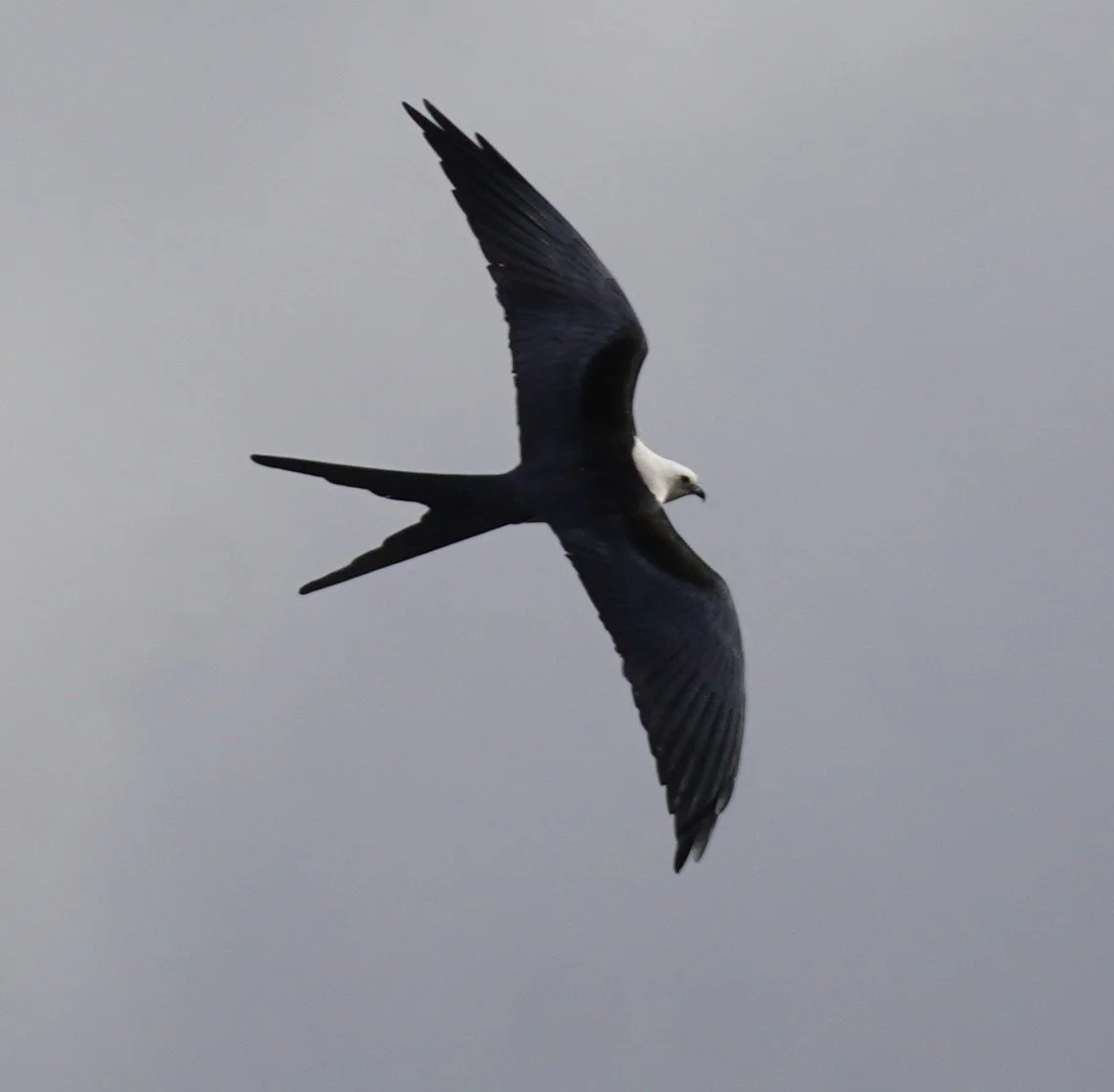
At Royal Palm Visitor Center’s Anhinga Trail, we encountered 28 different bird species and alligators and turtles were easy to find. Evidence of the ongoing drought in Florida were very apparent there: water levels along the trail were very low and much of the sawgrass in dried up areas was brown and flattened to the ground. Anhinga were abundant, though, and several fledglings were still in their nests. Several of our bird sightings there were a bit unexpected: an immature King Rail, a Sora, a white morph Great Blue Heron and a Louisiana Waterthrush! Other new additions to our trip list included Purple Gallinule, Wood Stork, Double-crested Cormorant, White Ibis, Black-crowned Night Heron, Green Heron, Great Egret, Black Vulture, Swallow-tailed Kite, Piliated Woodpecker and Northern Mockingbird.
We next visited the Gate 13/Hidden Lake area south of Research Road, but it appeared that the wetlands there were now mostly devoid of water and the large numbers of waterfowl, shorebirds and wading birds that were wintering there were no longer present, so we moved on to Long Pine Key. In the pine rockland habitat around Long Pine Key’s lake, we found 14 species, including five new for the trip: Cooper’s Hawk, Belted Kingfisher, Brown-headed Nuthatch, Eastern Towhee and Pine Warbler. We wanted to take advantage of the early afternoon low tide in Florida Bay, so after lunch at Long Pine Key’s picnic area, we drove directly to Flamingo.
At the Guy Bradley Visitor Center in Flamingo, we scoped the exposed mudflats and mangrove islands offshore, adding Black-bellied Plover, Laughing Gull, Caspian Tern, Forster’s Tern, Little Blue Heron, Tricolored Heron, Reddish Egret, Snowy Egret, American White Pelican, Brown Pelican and an immature Bald Eagle to our trip list. Our first Common Ground-Dove was spotted near the parking area, and a light morph Short-tailed Hawk was seen overhead. At Eco Pond, we added Common Gallinule, Greater Yellowlegs, Roseate Spoonbill and Northern Waterthrush. At the amphitheater area near Flamingo’s campground, we spent some time watching an Osprey in its nest feeding a pair of fledglings, but American Kestrel was the only new species added there.
Before leaving Flamingo, we stopped at the marina, where we spotted West Indian Manatee, Killdeer and an adult Bald Eagle. We made a quick stop at West Lake, where we were surprised to find that a few American Wigeon and Blue-winged Teal were still present. Our only American Coot for the trip was also there. Our final stop was at Mahogany Hammock, where we found a pair of fledgling Barred Owls in the hammock’s champion West Indian Mahogany tree. We added three other new species while exploring the boardwalk: Brown Thrasher, American Redstart and Black-throated Green Warbler.
By trip’s end, our bird list included 71 species, all of which are listed in this eBird trip report. Be sure to click on the nine checklists included in the trip report, as many of the photos taken by participants can be viewed there.
Swallow-tailed Kite. Photo by Brian Rapoza